
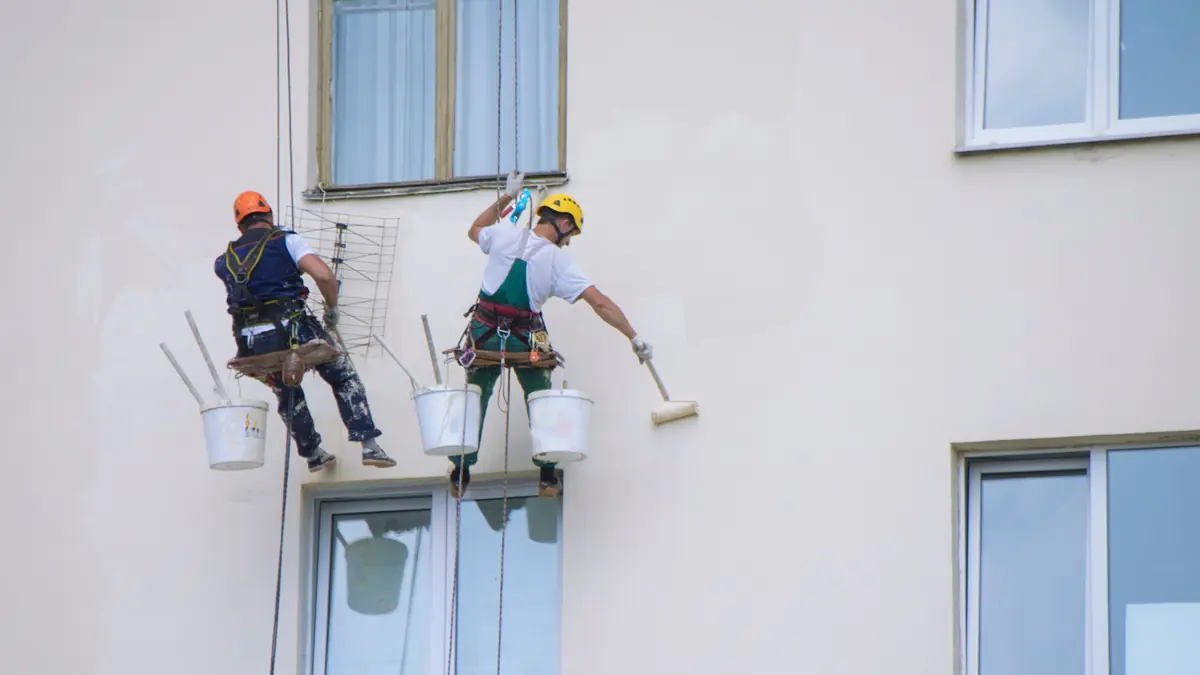
Short answer: a good exterior paint job lasts 5 to 10 years, and the spread inside that range is mostly about three things you can see from the driveway: what the siding is made of, which direction the wall faces, and whether the surface was washed and primed before the paint went on. Here are the numbers by material, why South Jersey sits toward the shorter end, and what to do about it.
Exterior paint lifespan by siding material
The published ranges from the three most cited guides agree closely. These assume quality acrylic paint, two coats, proper prep.
| Siding | Typical paint life | Notes |
|---|---|---|
| Wood clapboard or cedar | 3 to 7 years | Wood moves with moisture, so paint cracks sooner. Older homes in Pitman and Glassboro. |
| Aluminum siding | 5 to 8 years | Common on 1960s and 70s ranchers around Turnersville and Blackwood. Chalks before it peels. |
| Vinyl siding | About 10 years | Paintable with vinyl-safe colors. Must not go darker than the original. |
| Fiber cement (Hardie) | 10 to 15 years | The most stable surface. Common in 2000s and newer builds in Washington Township. |
| Stucco | 5 to 10 years | Hairline cracks let water in; elastomeric coatings help. |
| Painted brick | 8 to 17 years | Masonry holds paint well once sealed and primed. |
| Trim, doors, shutters | 3 to 5 years | Horizontal surfaces and south-facing doors go first, whatever the siding. |
Ranges compiled from Partnership Painting, UDA Services, and Rhino Shield guides. Trim numbers are from our own repaint calls around Gloucester County.
Why South Jersey is on the short end of the range
The national guides treat climate as one factor. Here it is the factor. Two things in particular work on paint around Washington Township:
Freeze-thaw cycles
Our winters hover around freezing instead of staying cold. A wall can go through dozens of freeze-thaw cycles between December and March. Water gets into a hairline crack in the paint, freezes, expands, and widens the crack. By spring the hairline is a flake. Wood and stucco suffer most because they hold water; fiber cement and vinyl barely notice.
Humid summers
July and August humidity feeds mildew, especially on north walls and under trees. Mildew does two things to paint: it stains it, and it slowly lifts it, because the growth is between the paint and the surface. Paint applied over mildew that was not killed first peels within a year or two no matter how good the paint was.
Put those together and the realistic life for a wood or aluminum sided house here is the bottom half of the published range, and the realistic life for fiber cement is still a decade or more. Siding material matters more than paint brand.
Which side of the house fails first, and why
Walk around any ten-year-old paint job in Sewell and you will see the same pattern. This is the part none of the big guides explain, and it changes how you should plan a repaint.
- South and west faces fail first. They take the afternoon sun. UV breaks down the binder in paint, which is why these walls chalk, fade, and crack years before the others. Dark colors absorb more heat and go faster: UDA's guide puts dark colors at 3 to 5 years versus 5 to 7 for light ones.
- North faces grow mildew. They rarely dry out. The paint is often intact underneath, but it looks terrible and the mildew eventually lifts it.
- East faces last longest. Morning sun, dries early, less UV.
- Horizontal surfaces go before vertical ones. Window sills, the tops of railings, door thresholds, and the bottom edge of every clapboard hold water. These are the first spots to peel on any house.
The practical takeaway: you do not always need a full repaint. A lot of homes around here can get three or four more years out of the job with a fresh coat on the south and west walls plus trim, while the north and east keep going. We quote it that way when it makes sense.
What else shortens or extends paint life
Prep is most of it
Washing, scraping loose paint, sanding glossy spots, caulking open joints, and spot priming bare wood. Every published guide says it and every failed paint job we are called to proves it. A two-day prep on a $6,000 job is normal.
Primer on bare and chalky surfaces
Chalky aluminum and weathered wood need a bonding primer or the topcoat has nothing to grip. Skipping it is the most common shortcut.
Two coats, applied in the right weather
Two full coats, with 12 to 24 hours between them, at 50 to 85 degrees. Painting in a humid heat wave, or late into a cold fall evening, cuts years off the job because the paint never cures properly. Our exterior season in South Jersey runs roughly April through October, and we watch the overnight lows in both shoulder months.
Paint quality
A 100 percent acrylic exterior paint from a major brand outlasts a bargain line by years. This is the one place where the more expensive can matters, and it is a small share of the total job cost since labor is most of it.
Washing before painting, and washing to keep paint alive
Two things most homeowners do not connect. First, every exterior repaint starts with a soft wash, then one to two days of drying. The low-pressure solution kills mildew at the root so it cannot grow through the new paint, and it removes the chalk and dirt that would otherwise sit between the paint and the wall. If a painter's quote does not include washing, the job is starting on the wrong foot.
Second, a gentle wash every year or two after painting adds real years to the job. It removes the mildew before it lifts anything and the grime before it holds moisture against the paint. We cover the schedule in how often to power wash your house.
Signs it is time to repaint
- Peeling or flaking, even small patches. Water is already getting behind it.
- Cracking or alligatoring, a web of fine cracks, means the paint has lost its flexibility.
- Chalking. Rub a wall and your hand comes away powdery. The binder is gone.
- Fading on the south or west wall that no longer matches the rest.
- Caulk pulling away around windows and trim.
- Bare wood showing anywhere. That is the urgent one, because wood rots fast once it is exposed.
Peeling and bare wood are repaint-now signs. Fading and light chalking give you a season or two to plan.
Plan the repaint before the siding needs replacing
The cost of a repaint is a fraction of replacing rotted trim and siding, which is what happens when peeling paint gets ignored for a few winters. If you are seeing any of the signs above, request a free estimate or text a photo to (609) 564-2519. We will tell you whether it is a full exterior painting job or just the sun-side walls and trim. 10% off any job over $2,500, and financing is available through Acorn Finance.
Exterior paint lifespan questions
How often should you repaint a house in New Jersey?
Every 5 to 10 years for most homes, toward the shorter end for wood and aluminum siding and the longer end for fiber cement and brick. South and west walls and trim often need attention sooner than the rest of the house.
Does dark exterior paint fade faster?
Yes. Dark colors absorb more UV and heat, and published guides put them at 3 to 5 years versus 5 to 7 for light colors on the same wall. If you want a dark color, use a top-tier paint and expect to refresh the sunny sides sooner.
Can you paint vinyl siding?
Yes, with a vinyl-safe paint in a color no darker than the original. Darker colors absorb heat and can warp the panels. Done right, painted vinyl lasts about ten years.
What time of year is best to paint a house exterior in NJ?
Late spring through early fall, when daytime temperatures stay between about 50 and 85 degrees and overnight lows stay above 50. We avoid painting during humid heat waves and in late fall when the paint cannot cure before the cold.