
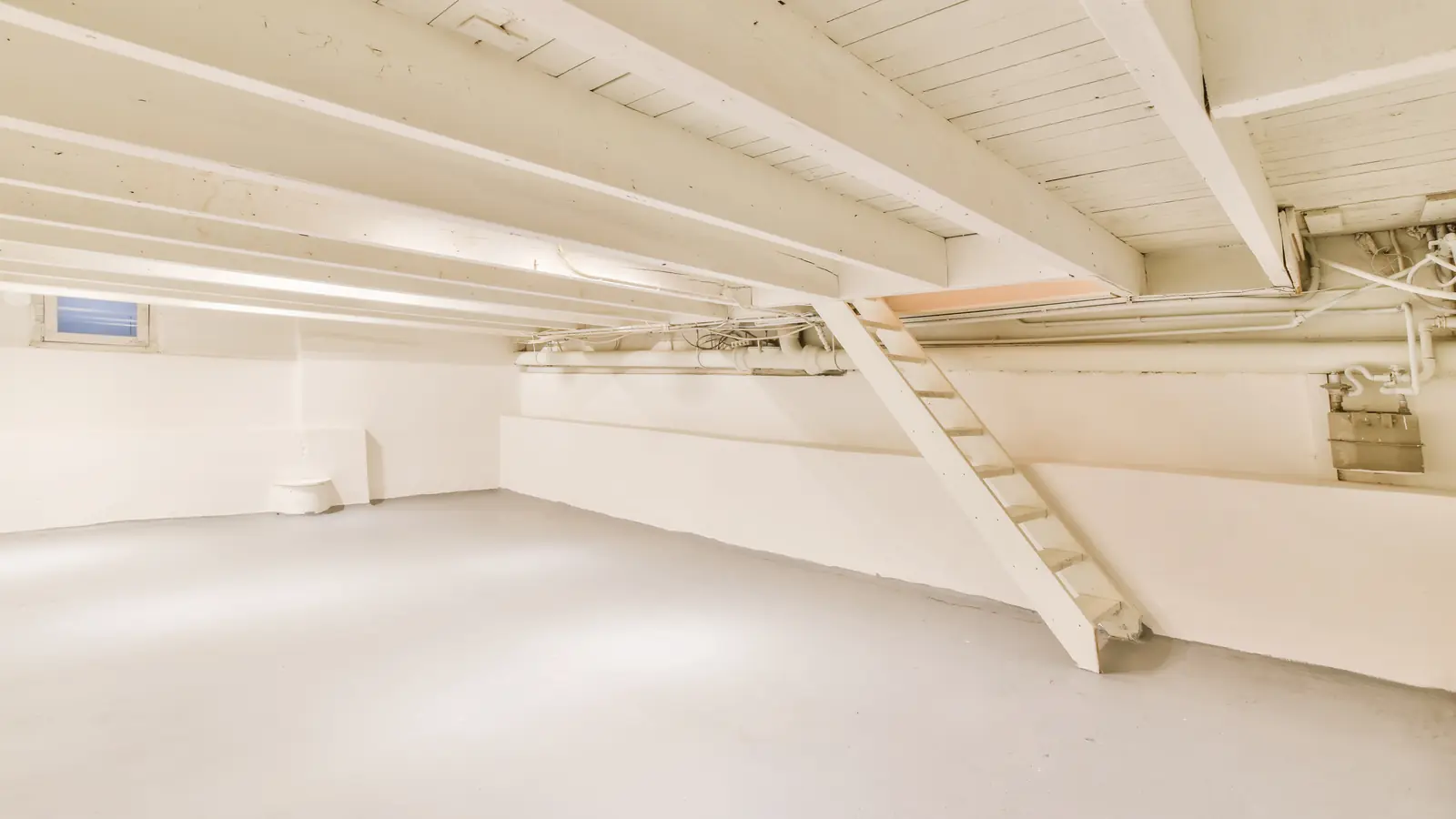
Spray painting basement ceilings: a finished look without drywall
Exposed joists, ductwork, pipes, and wiring sprayed one even color, usually black or white, in a day or two. Monarch Painting and Home Improvement does this for homeowners in Washington Township, NJ and the surrounding areas.
10% off any job over $2,500- Workmanship guarantee
- Licensed, bonded, insured (NJ HIC #13VH09143600)
- Angi Super Service Award 2023, 2024, 2025
- Financing available through Acorn Finance
- Family-owned by Ashley and Jorge Rios
Why people spray the basement ceiling instead of finishing it
A drywall or drop ceiling in a basement costs real money, eats headroom, and hides the pipes and valves you will eventually need to reach. Spraying everything overhead one color does the opposite. The joists, ducts, wires, and plumbing fade into a single dark or light plane, the room instantly reads as finished, you keep every inch of height, and the plumber can still get to the shutoff. It is the most popular way to finish a basement in the 1970s and 1980s houses around Washington Township, because those basements are tall enough to feel like real rooms once the ceiling stops looking like a mechanical space.
Black or white?
| Black (or charcoal) | White (or light gray) | |
|---|---|---|
| Look | Industrial, lofty, hides everything; the ceiling disappears | Bright, open, clean; mechanicals still show a little |
| Best for | Media rooms, bars, gyms, teen hangouts, lower ceilings you want to make vanish | Playrooms, offices, laundry, basements with little natural light |
| Lighting | Needs more fixtures; recessed or track lights look great against it | Reflects light, so existing fixtures go further |
| Touch-ups | Very forgiving | Shows dust and cobwebs sooner |
Not sure? We can spray a test patch at the estimate so you see it against your walls and lighting.
How we spray a basement ceiling
Clear and protect
You clear the floor as much as possible. We mask walls, floors, windows, electrical panel, water heater, furnace, and anything staying, and we shut HVAC vents and returns so overspray does not travel through the ducts.
Clean and prep
Cobwebs and dust come down with a vacuum and brush. Loose insulation gets removed or tucked. Open junction boxes get covers. Bare metal gets a quick primer so rust does not bleed through.
Spray
An airless sprayer with a dry-fall coating, so overspray turns to dust before it lands and sweeps up instead of sticking to your floor. Multiple passes from different angles so the backs of pipes and the sides of joists are covered, not just the faces.
Second coat and detail
Dark colors usually get a second pass for an even, dead-flat finish. We check with a bright light for holidays and misses.
Unmask and clean
Plastic down, vents reopened, overspray dust vacuumed, fixtures wiped. You get the basement back the same day or the next morning.
What a pro does that a weekend DIY usually does not
The DIY guides online are honest about how miserable this job is: a rented sprayer, a respirator, three hours of masking, a wet floor of overspray, and a sore neck. Here is what we bring that changes the outcome:
- A dry-fall coating. Standard paint through a sprayer lands wet on everything below. Dry-fall dries in the air within a few feet, which is why we can spray over a concrete floor and sweep up after.
- A real airless rig that lays down an even flat finish without the stripes and runs a handheld sprayer leaves on joists.
- Masking that holds. Overspray finds every gap. We seal vents, panel doors, and the top of walls, and we protect the furnace and water heater.
- Experience with older houses. Knob-and-tube remnants, open splices, and old insulation show up in basements here. We know what not to spray and what to flag for you.
- Speed. A typical basement is one to two days with us versus a long weekend you never get back.
What affects the price
- Square footage of ceiling, and how much is open versus already finished
- How much is up there: dense ductwork, plumbing runs, and wiring take more passes than a clean joist bay
- Color: black and charcoal typically need two coats for a uniform finish
- Masking: a finished staircase, finished walls, or stored belongings add protection time
- Add-ons: painting the block or poured walls at the same time is efficient and worth asking about
It is almost always less than drywall, and the estimate is free. 10% off any job over $2,500.
Financing available through Acorn Finance. Checking your options does not affect your credit score. See financing details.
Pair it with the walls
If we are already masked up, painting the basement walls in the same visit saves setup and gives you a complete room. Block and poured concrete get a masonry primer and a breathable finish; framed drywall walls get our standard interior painting process.
Basement ceiling questions
Does painting the ceiling hide the pipes and ducts?
It does not remove them, but one uniform color makes them stop registering as separate objects. In black especially, the whole ceiling reads as a single shadow and your eye goes to the walls and furniture instead.
Can I still reach wiring, valves, and plumbing afterward?
Yes. That is one of the main advantages over drywall. Everything stays exposed and accessible; it is just painted.
Will paint drip on my floor?
Not with dry-fall. The overspray turns to a dry powder before it lands and gets swept or vacuumed. We still mask floors, finished walls, and anything you cannot move.
How long until I can use the basement?
Usually the same evening or the next morning. The coating is dry to the touch quickly; we recommend a day of ventilation before moving furniture back under it.
Do you paint over the insulation?
Exposed fiberglass in the joist bays is usually removed or tucked above the rim so the finish is clean. Spraying insulation itself does not work well, and we will talk through options at the estimate.
What about the ductwork and metal pipes?
They get painted along with everything else. Bare galvanized or rusty metal gets a primer first so the finish bonds and nothing bleeds through.
Will the HVAC spread paint dust through the house?
No. We shut the system off and seal the vents and returns during spraying, then reopen them once the overspray has settled and been cleaned up.
How long does the job take?
One to two days for most basements, including masking, two coats, and cleanup.
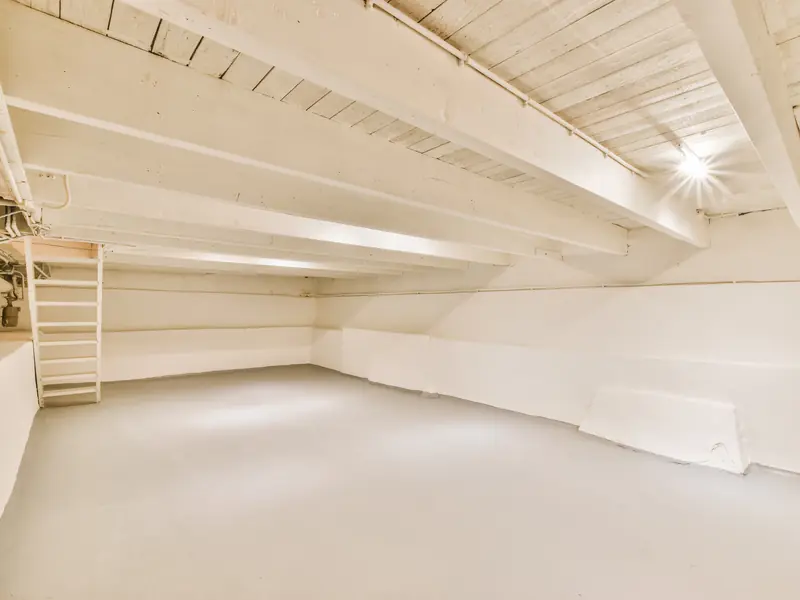
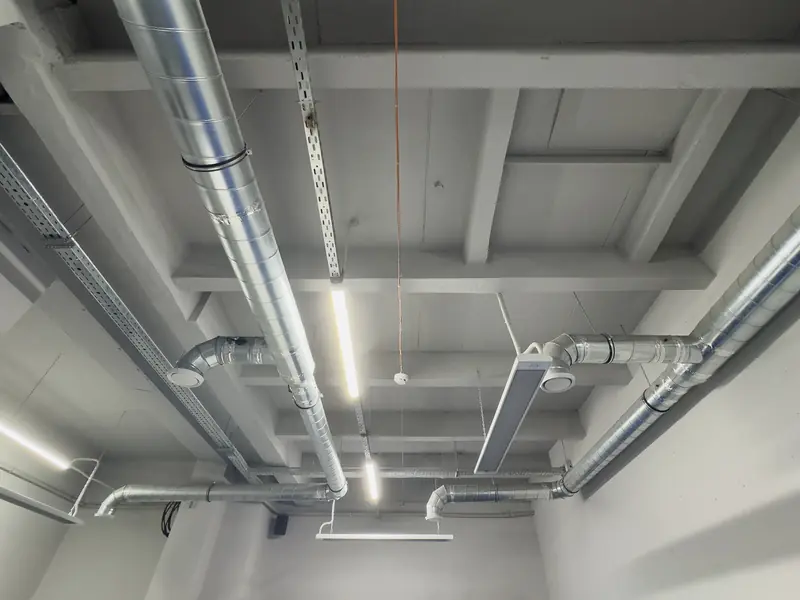
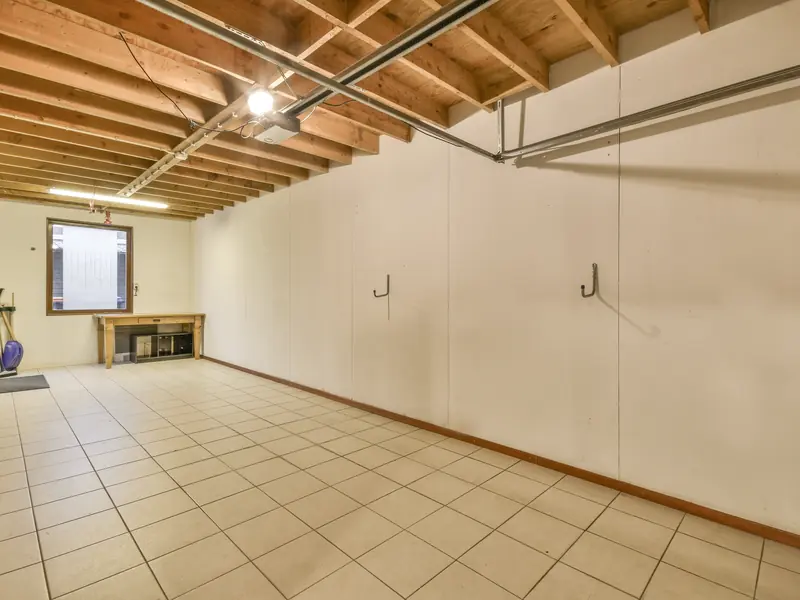
Recent basement ceiling work
Related services
Ready to make the basement feel finished?
10% off any job over $2,500. Call or text (609) 564-2519, or request a call and Ashley will reach out to set up a time.